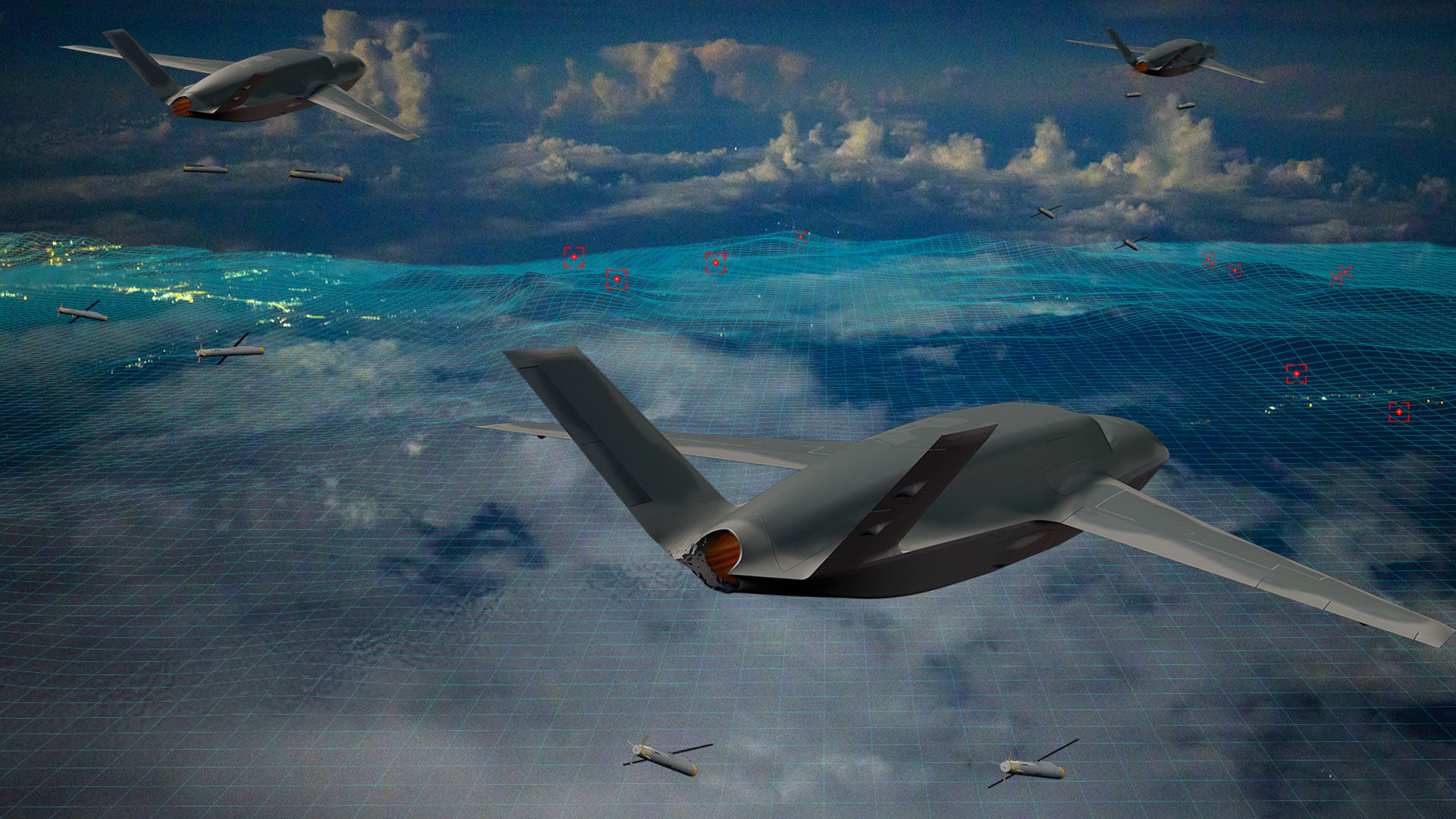
General Atomics Aeronautical Systems, Inc. (GA-ASI) has expanded its Gambit Series of unmanned combat air vehicles (UCAVs) with the introduction of Gambit 6 — which brings semi-autonomous combat jets into the realm of air-to-ground operations.
The Gambit 6 platform is optimized for roles such as electronic warfare, suppression of enemy air defenses (SEAD), deep precision strike, and more.
These capabilities address the growing need for versatile systems that can operate effectively in contested environments — specifically against maneuver forces, ground targets, and similar, said GA-ASI President David R. Alexander.
“These are real threats, and they require real solutions,” Alexander said in a November press release from the company announcing the aircraft.
“The modular architecture and signature-reducing internal weapons bay of Gambit 6 allow for easy integration of advanced autonomy, sensors, and weapons systems, ensuring the aircraft can adapt to a wide range of operational scenarios,” he said.
Previous aircraft in the Gambit Series were built and optimized for the air superiority mission. Gambit 6 brings the UCAV into the strike domain — but not with many radical departures to the aircraft itself.
The Gambit Series is built around a common core platform that accounts for a significant proportion of the aircraft’s hardware, including the landing gear, baseline avionics, and chassis. This shared foundation reduces costs, increases interoperability, and accelerates the development of mission-specific variants.
Gambit 6 is an example of this modular approach, offering tailored capabilities to meet a specific set of requirements while its common core keeps costs down and enables rapid mass production.
The modular design also supports rapid reconfiguration, enabling air forces to adapt the platform for diverse missions such as intelligence, surveillance, and reconnaissance (ISR), multi-domain operations, advanced training, and stealth reconnaissance.
By leveraging specialized configurations, Gambit aircraft offer tailored capabilities that enhance operational efficiency, reduce costs, and improve survivability in contested environments.
Addressing Strategic Challenges
GA-ASI launched Gambit 6 in response to the growing security challenges faced by air forces worldwide, including in the Indo-Pacific and in Eastern Europe.
Peer adversaries equipped with advanced air defenses and fighters pose significant risks to crewed systems, creating demand for uncrewed solutions that can complement human-crewed strike fighters.
The Gambit Series, including Gambit 6, provides a cost-effective pathway to fielding large numbers of mission-tailored uncrewed aircraft, shifting the cost exchange ratio in contested airspace while also protecting high-value manned assets.
Gambit 6 is designed to provide reliable air-to-ground combat capabilities in denied environments, maintaining comms via resilient proliferated low-Earth orbit satellites. Resilient comms combined with a low-observable design — while not on the same level as a stealth bomber or fighter — make any Gambit aircraft a threat that an adversary must honor.
Significant degrees of mission autonomy aboard the aircraft also mean that if an adversary degrades communications on the battlefield, Gambit 6 can continue its mission and fight through jamming or other disruptions.
In practice, this means an adversary must expend resources to neutralize less costly yet still lethal uncrewed jets. This spreads adversary resources thin and provides openings for more exquisite and precious crewed platforms to establish air superiority and create havoc behind enemy lines.
International Collaboration and NATO Interoperability
GA-ASI plans to make Gambit 6 airframes available for international procurement starting in 2027, with European missionized versions deliverable by 2029.
The firm plans to support European customization and assembly through its German affiliate, General Atomics Aerotec Systems GmbH (GA-ATS), ensuring alignment with regional defense standards.
The company is actively building industry partnerships throughout Europe to provide sovereign capabilities for all its platforms.
The Gambit Series also supports NATO interoperability goals.
Its modular architecture and software-driven upgrades enable cross-country maintenance agreements and stockpiling of spare parts, fostering closer military-to-military cooperation.
Future-Focused, Rooted in Experience
The Gambit Series represents a new era in airpower, pairing large numbers of autonomous, mission-focused aircraft with human-crewed fighters to enhance sensing, weapons capacity, and survivability in contested airspace.
As defense budgets tighten and operational demands increase, Gambit 6 offers a proven design that balances adaptability and affordability.
For decades, GA-ASI has led the industry in fielding UAS technology by delivering the right capabilities for the most relevant missions at a fraction of the procurement and operations costs of traditional manned platforms.
The company’s products are built to adapt and scale as mission needs evolve, ensuring warfighters come prepared and stay prepared for the complexities they face on the 21st-century battlefield.
And with more than 9 million flight hours logged across its fleet, users know they are getting systems built on real-world mission experience no other competitor can touch.
Whether delivering persistent ISR or executing autonomous collaborative engagements, GA-ASI continues to innovate, ensuring its systems provide nations with a decisive advantage in the face of ever-growing threats.