Can the U.S. Air Force prevent the People’s Liberation Army (PLA) from invading Taiwan in 2035? The answer might be no — unless Washington gets serious about new practices and technology by then, according to a new report from the bipartisan Hudson Institute.
Today’s Air Force is the oldest, smallest, and least ready since the end of the Cold War — and it continues to shrink. The Department of the Air Force Fiscal Year 2026 budget proposes retiring 340 aircraft while purchasing only 76.
That continued decline isn’t only troubling because more capacity is still needed. Recent analysis suggests that numbers alone aren’t enough in any event.
In Hudson’s report, Flipping the Script: Redesigning the US Air Force for Decisive Advantage, Timothy Walton and Dan Patt demonstrate that even by adding nearly 500 aircraft with roughly $100 billion in spending over the next decade, the Air Force would likely still fail to prevent a PLA invasion of Taiwan under its current force design. In Hudson’s latest 2035 Taiwan tabletop exercises, simply fielding and implementing “more of the same” ignored crucial vulnerabilities and left aircraft exposed to massed missile strikes and airfield attacks by a PLA that is only increasing in strength.
However, the rebalanced force design proposed by Hudson introduced new force implementation and readiness procedures that saw success with both sustained and increased Air Force budgets over the next decade.
The message is clear: The future fight will likely reward creative force implementation over numbers alone. As part of the evolving equation to deter and defeat aggression in the Pacific, experts find that the Air Force could adopt new force concepts that would include creative applications of both emerging and mature uncrewed aircraft systems to create new dilemmas for adversaries, expand situational awareness, and provide the mass the Air Force also needs.
Edge–Pulsed–Core Force Design
Hudson proposes that the U.S. Air Force build on its “One Force” concept, focusing on three mutually reinforcing elements: an Edge Force, a Pulsed Force, and a Core Force — enabled by resilient airbases and countermeasures aimed at hostile command & control networks.
Rather than relying on large numbers of traditional fighters operating from vulnerable forward bases, this architecture distributes objectives across these three key layers. The Edge Force operates inside the most contested zones with mobile, runway-independent capabilities, providing situational awareness and conducting counter-air operations to develop opportunities for Pulsed and Core Forces. The Pulsed Force generates episodic strikes from range, leveraging proliferated sensing and resilient airbases. And the Core Force provides scalable combat air power, command & control, intelligence, and sustained global air operations from distributed airfields across the Pacific.
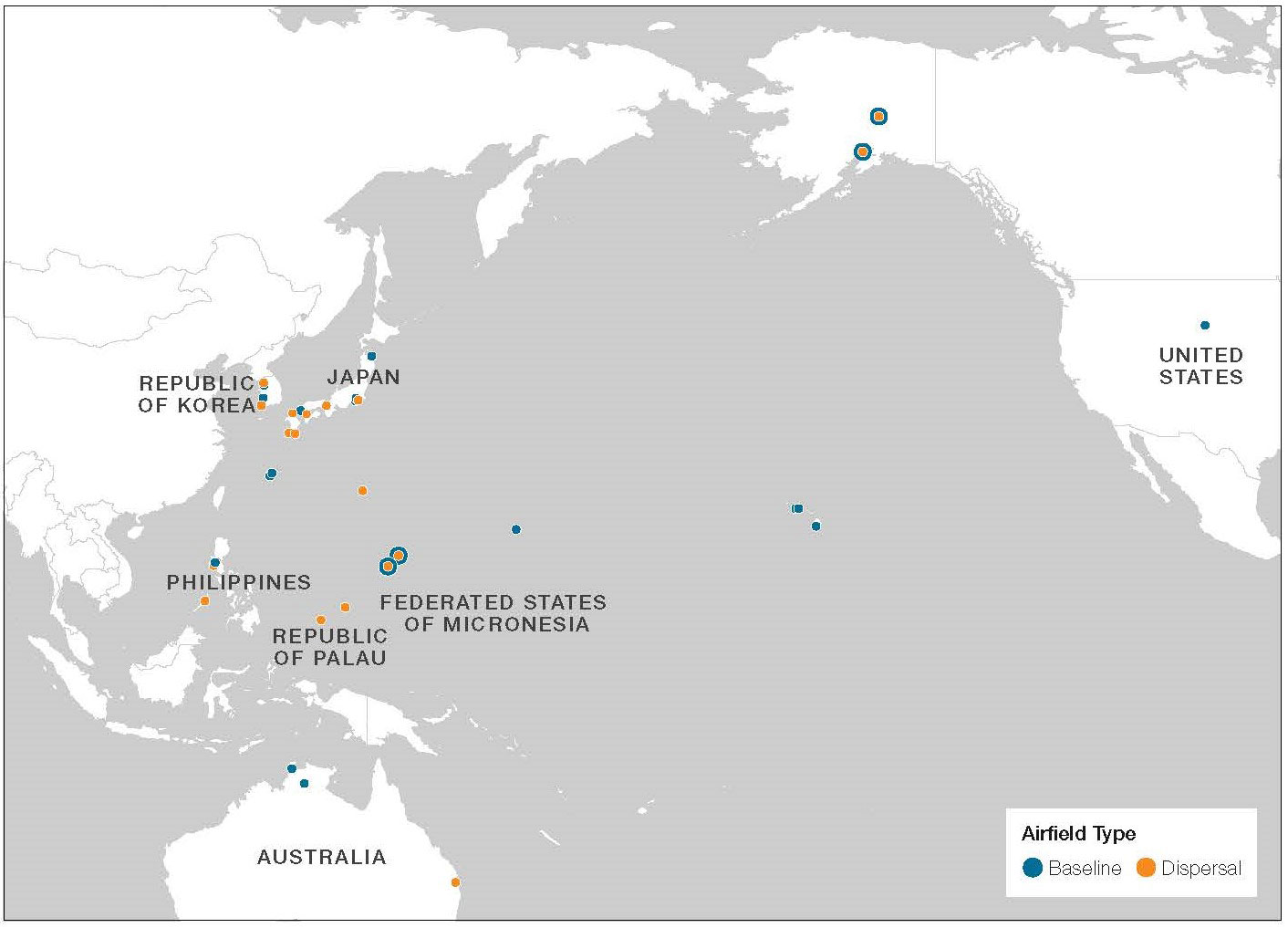
Source: Hudson Institute Report, Flipping the Script: Redesigning the US Air Force for Decisive Advantage
In other words, the Air Force needs units to sustain the fight inside the most dangerous and contested zones even as the balance of other units and aircraft support operations from farther away in more permissive areas, Hudson’s report argues.
Uncrewed aircraft are critical enablers of this proposed force design. They not only reinforce traditional intelligence, surveillance, and reconnaissance collection, as well as communications functions, but also expand on offensive counter-air, targeting, strike, and electronic warfare.
Uncrewed Aircraft Enablers
At the forward edge, low-cost, runway-independent systems could complicate PLA strikes and reveal high-value targets for U.S. forces. Rather than sending more exquisite human-crewed fighters into contested airspace, Hudson suggests the Air Force could preposition rapidly manufactured ground-launched UAS that extend range and impose new dilemmas within the PLA’s missile envelope.
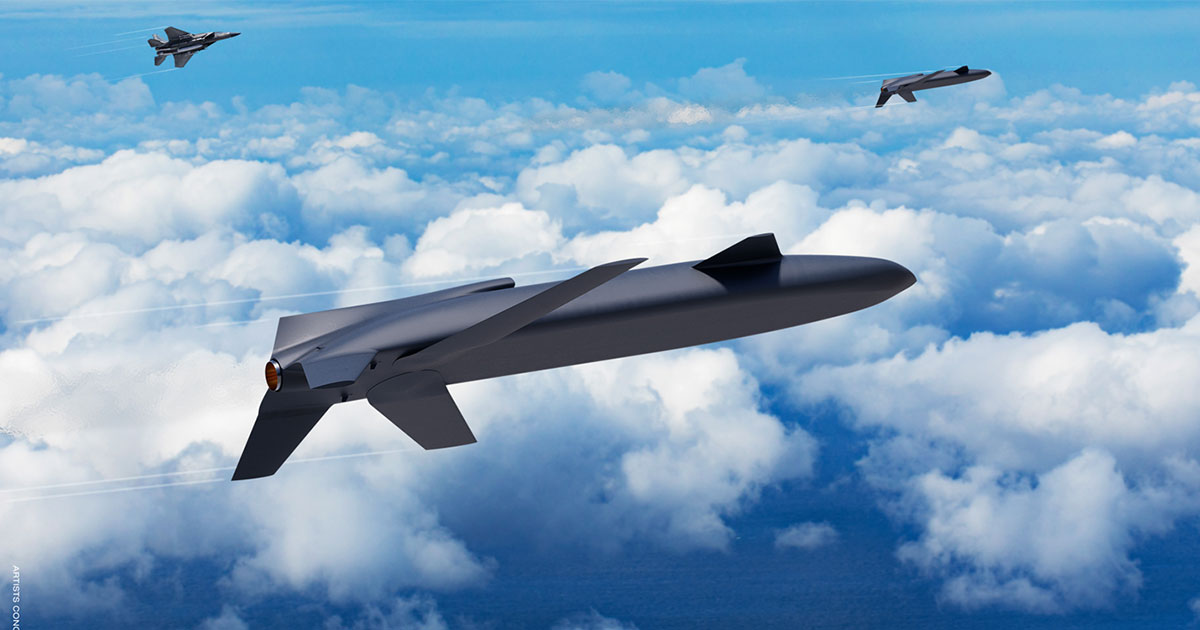
Concepts such as the X-68A LongShot — an air-launched uncrewed vehicle armed with air-to-air missiles being developed by the Defense Advanced Research Projects Agency in partnership with General Atomics Aeronautical Systems, Inc. — allow human-crewed aircraft to remain outside the most lethal engagement zones in Hudson’s simulations.
LongShot also has ground-launch potential, according to Hudson experts. Different permutations of LongShot could enable the Air Force’s Edge Force to challenge PLA aircraft, provoke hostile air defenses, and reveal high-value enemy assets, all while launching from ground-mobile forward bases that are often challenging for adversaries to find and target.
Hudson’s Pulsed Force relies on concentrated episodic strikes on high-value targets. In this layer, next-generation uncrewed combat jets — often described as Collaborative Combat Aircraft (CCA) — would play an important role in escorting and scouting for human-crewed bombers. Platforms such as General Atomics’ Gambit Series illustrate how lower-cost autonomous aircraft could coordinate with and fly ahead of bombers or crewed fighters, carrying sensors, electronic warfare payloads, or additional munitions to help carry out successful missions.
By pairing crewed aircraft with multiple CCAs, the Air Force can also increase combat mass without increasing pilot requirements or operational risk. Each CCA also costs a fraction of a traditional human-crewed fighter or bomber. This enables the Air Force to deploy these aircraft at scale.
The emerging YFQ-42A represents a concrete step toward operationalizing this model. If fielded rapidly and in meaningful numbers, CCA could provide significant capacity from distributed bases while absorbing risk in the opening stages of armed conflict.
Hudson’s Core Force provides a foundation for distributed intelligence, surveillance, and reconnaissance; counter-air missions; and other necessities. In addition to newer-model jets such as the YFQ-42A, mature long-endurance turboprop platforms such as the MQ-9A Reaper and MQ-9B SkyGuardian are relevant to these operations as well. Improved survivability packages, electronic warfare integration, resilient data links, and airborne early warning payloads enable MQ-9 series aircraft to operate in both permissive and contested theaters.
They would provide crucial intelligence collection and dissemination, targeting, maritime surveillance, and cruise missile detection — critical for both Edge and Pulsed Forces.
Together, uncrewed aircraft would enable the Air Force to protect pilots and aircrews, sustain a higher operational tempo, and preserve the advantage against the adversary — even with a leaner force than previous decades.
Deterring a PLA invasion of Taiwan requires more than just procuring more aircraft — it requires new and innovative ways to operate, using both existing and rapidly fieldable capabilities. By embracing creative UAS applications and rethinking its force design, the Air Force can shift from a vulnerable concentration of assets to a distributed, adaptive combat ecosystem.