April 27, 2026 | By General Atomics Aeronautical Systems, Inc.
The revolution isn’t coming; it’s here.
In battlefields from Ukraine to the Middle East, uncrewed aerial systems (UAS) are impacting the fight every day. They are a fact of modern warfare, and the United States Marine Corps must do what they’ve always done: adapt and overcome.
The problems faced by the Marine Corps aren’t the same as those in Ukraine. The Marine Corps must project power across thousands of miles of contested ocean against an adversary built to stop exactly that. Every supply line is targeted. Every platform is at risk of being detected. Every communication is vulnerable to jamming.
The task is daunting, but daunting tasks have always been what Marines are made for. Tackling it means abandoning silver bullets or easy answers and embracing ambiguity and agility. Embracing not just one system but a system of systems gives Marines layered capability.
General Atomics Aeronautical Systems, Inc. (GA-ASI) has a full suite of solutions built for the fight Marines are preparing for: a sprawling, high-stakes conflict in the toughest theater in the world.
What the Russia-Ukraine War Teaches (And What It Doesn’t)
The Russia-Ukraine conflict proves UAS matter. It also proves adversaries adapt fast. What worked in month six gets countered by month 12. Russian jamming killed commercial drones. Ukrainians built mesh networks. Russians adapted again. The cycle never stops.
More important: Ukraine and the Pacific are different fights.
The fight in Ukraine is defined by interior lines, with NATO supplies flowing across borders supporting land-based operations. Distance is measured in tens of kilometers and troops are fighting from and defending prepared positions.
The Pacific theater is defined by expeditionary operations and contested logistics across thousands of kilometers. It’s a theater defined by vast expanses of ocean pocked by islands. There is no sanctuary, no supply hub across a safe border.
The adversary is not a diminished yet aggressive land power struggling with command and control, but a well-trained and equipped force that spent 20 years building the world’s best anti-access network specifically to stop what Marines do and where they do it.
This is a peer fight in their backyard.
What The Pacific Theater Demands
Range and persistence. Small tactical drones are essential—the Russia-Ukraine conflict proves it. But they can’t cross oceans or maintain presence across hundreds of miles. The Pacific needs platforms that can.
Built for contested environments. Commercial systems adapted for permissive operations won’t survive sophisticated air defenses and advanced electronic warfare, nor will workarounds like tethering drones to fiber optic cables work across Pacific Ocean distances. Marines need platforms engineered from the start for high-end threats.
Adaptable systems. Adversaries evolve faster than acquisition cycles. Systems must be built for rapid capability updates, not frozen to today’s threat.
Networked at scale. Small systems provide tactical dominance. Large platforms project that capability across maritime distances while serving as communications hubs and motherships.
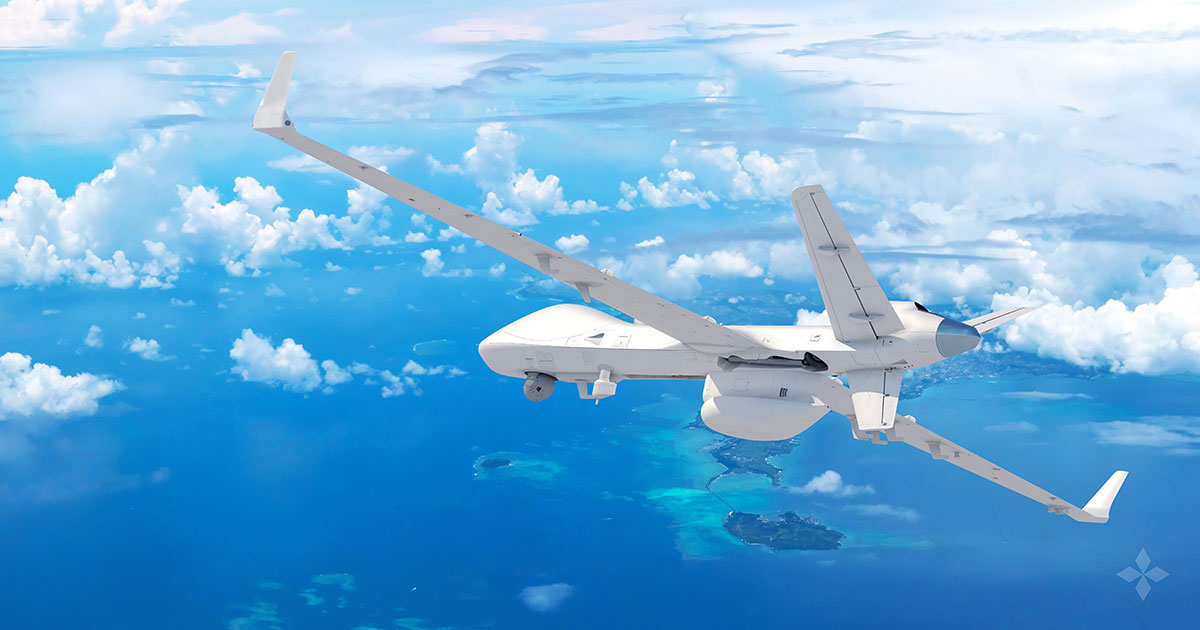 |
| Rendering of MQ-9B SeaGuardian conducting maritime surveillance operations in an expeditionary environment |
Layered Capability
Every system size has a role.
- Man-portable UAS: tactical dominance at the point of contact
- Small UAS and Launched Effects: extended reach beyond tactical ranges
- MALE platforms: persistence and range across maritime distances
The results:
- Networked operations from the tactical fight to the theater level
- Communications when satellites are degraded
- Effects against sophisticated air defenses without risking aircrews
- Calculated forward losses while preserving what matters
This is the asymmetric advantage the Pacific theater demands.
The GA-ASI Solution
GA-ASI builds unmanned systems for this exact fight. Not adapted or modified: purpose-built.
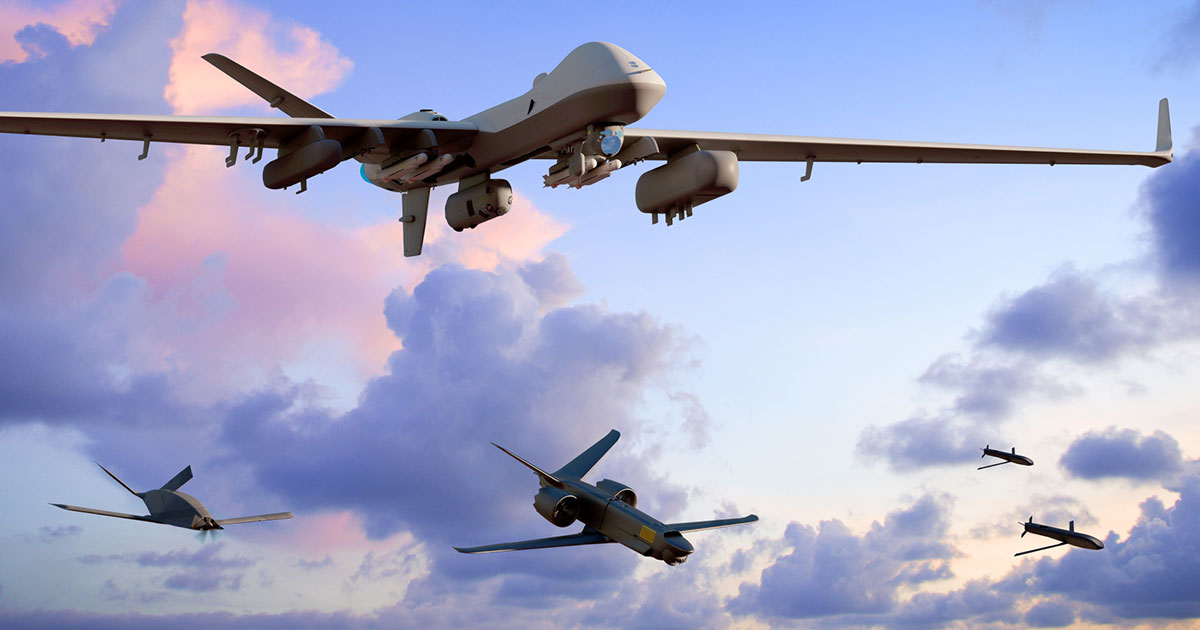
MQ-9 as a mothership: An MQ-9 can carry two small UAS while providing persistent ISR and comms relay. The MQ-9 launches the smaller UAS forward—one creates mesh networks that defeat jamming, the other delivers kinetic effects or electronic warfare. Small UAS risk themselves in threat environments while MQ-9 maintains standoff. This approach accepts losses of attritable systems forward while preserving high-value assets.
MQ-9B SeaGuardian® for maritime operations: With a 79-foot wingspan, maritime sensor suite, advanced payload versatility along with long endurance, SeaGuardian is purpose-built for the maritime fight. It can transit from allied bases deep into contested areas and stay there, hunting hostile vessels, monitoring coastlines, and as a network enabler for tactical systems.
SeaGuardian operates across hundreds of thousands of square miles. That’s not Ukraine scale. That’s Pacific scale.
The Bottom Line
The Russia-Ukraine conflict validated principles: attritable assets work, rapid kill chains matter, and adaptability beats static solutions. But principles aren’t platforms. The Marine Corps needs systems engineered for expeditionary maritime warfare against a peer competitor across distances that exceed those of any current conflict.
GA-ASI’s portfolio spans from small UAS and launched effects to mothership platforms with 40-hour endurance. The systems feature an open architecture design for rapid updates and leverage battle-tested airframes with millions of flight hours in combat environments ranging from permissive to denied.
GA-ASI offers operational platforms, not experiments. The technology is real. The capabilities are proven. The choice is simple: field systems built for the Pacific fight or systems optimized for someone else’s war. The Indo-Pacific theater demands purpose-built solutions on an expeditionary scale.
Unmanned systems aren’t optional anymore. The question is: which can survive and deliver effects in the most demanding environments on Earth?